
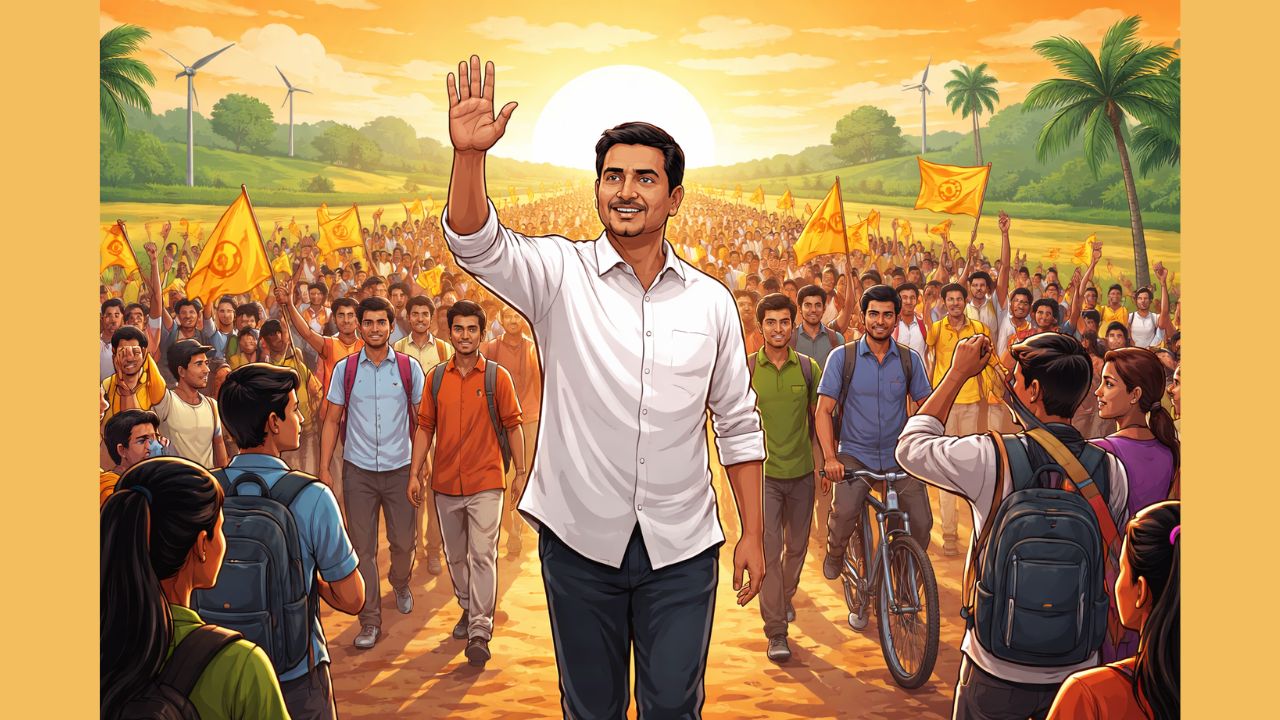
Yuva Galam, meaning “Voice of the Youth,” was a large-scale political outreach initiative led by Nara Lokesh, National General Secretary of the Telugu Desam Party (TDP). This padayatra (foot march) became one of the longest political marches in Andhra Pradesh and played a significant role in shaping youth-focused political discourse in the state. More than just a campaign, Yuva Galam aimed to amplify the concerns of young citizens and bring them into mainstream political discussion.
Table of Contents
Background and Origin of Yuva Galam
Yuva Galam was launched in January 2023 at Kuppam, the constituency of TDP chief N. Chandrababu Naidu. The march was designed as a grassroots outreach program to connect directly with people, particularly the youth, across Andhra Pradesh.
At a time when issues such as unemployment, education quality, and economic uncertainty were affecting young people, the TDP leadership felt the need for direct engagement. Nara Lokesh took the initiative to personally walk across the state, listening to public grievances and conveying the party’s vision for youth empowerment.
Scale and Duration of the Padayatra
Yuva Galam covered approximately 4,000 kilometers, making it one of the longest political padayatras in the history of Andhra Pradesh. The march lasted for nearly 400 days and passed through most districts, including rural villages, semi-urban towns, and major cities.
The route was carefully planned to ensure interaction with diverse groups such as students, farmers, small traders, unemployed graduates, women, and self-help groups. Lokesh walked several kilometers daily, holding public meetings and one-on-one interactions along the way.
Core Objectives of Yuva Galam
Addressing Youth Unemployment
One of the central themes of Yuva Galam was unemployment. Lokesh highlighted delays in government job notifications and lack of recruitment drives. Many young participants shared their struggles after completing education but failing to secure stable employment.
The padayatra emphasized the need for transparent recruitment processes, skill development programs, and private sector job creation.
Education and Skill Development
Concerns over declining education standards were widely discussed. Students complained about outdated syllabi, lack of campus placements, and inadequate infrastructure in government institutions.
Yuva Galam advocated for modernized education systems, digital learning tools, and industry-linked courses to improve employability.
Support for Youth Entrepreneurship
Lokesh encouraged young entrepreneurs and startup founders by discussing access to loans, mentorship, and government support schemes. He stressed the importance of creating an ecosystem that supports innovation and small businesses.
Governance and Development Issues
Apart from youth-specific matters, Lokesh addressed broader governance issues such as rising prices, law and order, infrastructure development, and welfare delivery. The march became a platform to critique the ruling government’s policies and administrative performance.
Public Engagement and Participation
Yuva Galam received a massive public response. Thousands of people gathered at each stop, especially young voters. Lokesh conducted interactive sessions where participants openly shared their personal stories, financial struggles, and expectations from leaders.
This direct interaction built emotional connections and helped the campaign gain widespread attention on social media and news platforms. Youth organizations, student unions, and local volunteers actively participated in organizing events.
Political Impact of Yuva Galam
Strengthening TDP’s Youth Base
The campaign significantly strengthened TDP’s connection with first-time voters and young professionals. Lokesh’s consistent presence on the ground helped counter criticism about dynastic politics by portraying him as a hardworking and accessible leader.
Building Lokesh’s Political Image
Before Yuva Galam, Nara Lokesh faced skepticism about his leadership capabilities. The padayatra helped reshape his image as a committed politician willing to engage directly with people. Walking long distances daily showcased endurance, discipline, and dedication.
Election Strategy and Messaging
Yuva Galam served as a foundation for TDP’s election strategy. The feedback collected during the march was reportedly used to shape the party’s manifesto and campaign promises. Youth welfare became a central focus in TDP’s political narrative.
Challenges Faced During the March
The padayatra was not without challenges. Lokesh had to deal with physical exhaustion, extreme weather conditions, and political opposition. There were also instances of political tension in some regions.
Despite these obstacles, the march continued without major interruptions, demonstrating organizational strength and strong support from party workers.
Media Coverage and Public Perception
Yuva Galam received extensive media coverage, especially on regional television channels and digital platforms. Supporters praised it as a sincere attempt to understand grassroots issues, while critics viewed it as a political strategy.
From a neutral standpoint, the campaign succeeded in keeping youth-related issues in the public spotlight for an extended period. It also forced other political parties to respond to concerns raised during the march.
Broader Significance in Andhra Pradesh Politics
Padayatras have a long tradition in Indian politics, but Yuva Galam stood out due to its length and youth-centric theme. It highlighted the growing importance of young voters in shaping election outcomes.
The campaign also demonstrated a shift in political communication, moving from stage-based speeches to direct street-level engagement. This approach helped bridge the gap between leaders and citizens.
Evaluation of Yuva Galam’s Long-Term Impact
The real impact of Yuva Galam depends on policy implementation and governance outcomes. While the march successfully collected public feedback and mobilized youth support, the effectiveness will be measured by how these issues are addressed through legislation and administrative action.
If the concerns raised are translated into concrete reforms, Yuva Galam may be remembered as a turning point in youth politics. Otherwise, it may remain a symbolic outreach exercise.
Yuva Galam was both a political mobilization effort and a platform for youth expression. It brought employment, education, and governance issues into mainstream debate while strengthening Nara Lokesh’s political standing.
From a neutral perspective, the padayatra demonstrated the power of direct public engagement in modern politics. It also highlighted the growing demand among young citizens for accountability, opportunity, and transparent governance.
Whether Yuva Galam ultimately delivers lasting change depends on future political actions and policy decisions. However, its influence on Andhra Pradesh’s political landscape is undeniable, especially in shaping youth participation and expectations from leadership.
If you want, I can also prepare a version focusing on controversies, election outcomes, or a comparison with other political padayatras in India.